Tormed ER Hermetic Sealed Doors

Tormed ER Hermetic Sealed Doors
Specifications
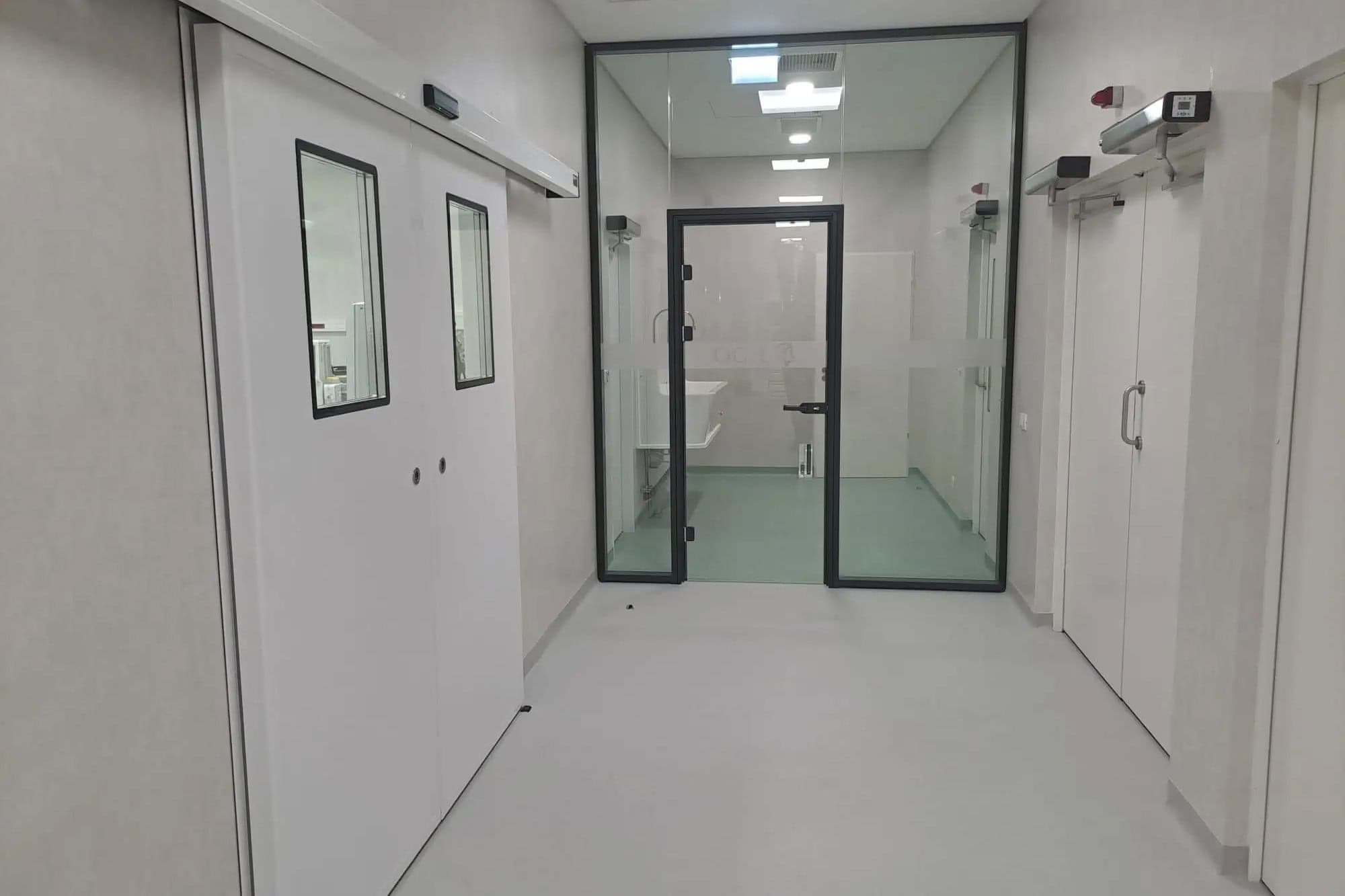
Tormed ER is a range of automatic hermetic doors designed for medical spaces with strict sealing and safety requirements. The innovative closing system creates a perfect seal on all four sides, through a mechanism that allows the panel to lower and slide simultaneously, ensuring optimal isolation against contaminants.
Why Tormed ER?
With over 30 years of expertise and participation in over 100 medical projects, Tormed ER reflects our commitment to providing solutions that enhance safety and efficiency in hospitals.
Silent Operation
Innovative seals reduce noise during opening and closing, enhancing comfort in medical environments.
Guaranteed Safety
Integrated sensors protect both the passage area and the lateral movements of the panels, preventing accidental collisions.
Versatile Design
Available in a variety of finishes and colors, with options for glazed inserts for increased visibility and brightness.
Optimized Hygiene
The perfectly flat surface of the panels prevents dust accumulation, and components are designed for easy cleaning.
Types of Doors Based on the Material They are Made from:
Glazed Doors
Panels made of laminated, secure glass with a 20 mm air chamber for thermal and sound insulation. Non-toxic silicone seals compliant with medical standards.
HPL Doors
Panel with a “sandwich” structure made of shock-resistant, chemical-resistant HPL panels, fireproof MDF, and high-density extruded polystyrene.
Special Doors for Radiology
Shielding against X-rays through lead inserts of 0.5 – 4mm, depending on requirements.
Other Options and Accessories
- Customized control systems: “elbow” buttons, “no touch” buttons, pedals, radar sensors.
- FLUSH thermal and sound-insulating glazing, coplanar with the door surface, for optimal hygiene.
- Stainless steel handles, designed for wear resistance and compatibility with disinfectant agents.
- Wide range of colors, adaptable to the aesthetic and functional requirements of each project.
Service and Maintenance
To maintain the optimal performance and safety of hermetic sealed doors, periodic servicing is essential. These doors are used in critical environments, where any malfunction can affect contamination control and operational flows. Regular checks ensure the sealing mechanism works correctly, calibrating the pressure required for a perfect close and preventing premature wear of essential components such as sealing gaskets, sensors, and automatic drive systems.
A well-established maintenance program helps reduce operational risks and extends the service life of the doors, preventing costly interventions caused by wear or unexpected failures. Periodic sensor testing and adjustment of mechanical and electronic components guarantee user safety, avoiding accidents and blockages in heavily used access areas. Choosing a specialized service partner ensures compliance with current regulations and the long-term maintenance of optimal door performance.
Read more about service and maintenance for hermetic sealed doors on the service and maintenance page.
Areas of use
Controlled-atmosphere rooms
in hospitals, clinics, rehabilitation centers, care centers, and dental offices, ensuring a safe environment compliant with health standards.
Public or private hospitals
in areas such as operating suite corridors, pre- and post-op rooms, operating theaters, radiology rooms, and “clean” rooms
Pharmaceutical industry
in drug manufacturing plants, where processing and handling substances require strict environmental conditions.
Research/analysis laboratories
in scientific institutes, testing centers, and specialized units that require strict control of particles and contaminants.
Other controlled-atmosphere rooms
in medical and industrial facilities, where maintaining a stable environment is essential for process safety and accuracy.
References




Our Promise
6 commitments we undertake in every project, fully aligned with our values.
Complete
Vision.
We manage projects with a 360° approach.
Turnkey
Solutions.
We customize each project based on requirements and budget.
Proven
Expertise.
30 years of know-how for successful projects.
Value of
Innovation.
Advanced technology from top European suppliers.
Fast and
Flexible.
We adapt and deliver efficiently in every project.
Power of
a Group.
Part of EMI Group, European leader in access.


Price
Because our customers’ needs are unique, and the KADRA team aims to provide products to the highest quality standards, the price of Tormed ER hermetic sealed doors can be determined after you complete the form below. Based on your answers, our professionals will prepare a customized quote. Complete the form below!
Contact Us Here
Click to Display the Form
Frequently asked questions
Where is a sealed sliding door required?
A sealed sliding door is required in spaces where the transfer of air, particles, and contaminants must be controlled. It is used in operating theaters, pre- and post-op rooms, clean rooms, laboratories, radiology departments, and facilities in the pharmaceutical industry.
How does a hermetic sealed sliding door work?
A hermetic sealed sliding door lowers and slides simultaneously when closing, pressing the seals on all four sides of the access opening. This mechanism creates continuous sealing and limits air exchange and the ingress of contaminants.
What’s the difference between a sealed sliding door and a standard automatic door?
A sealed sliding door provides controlled sealing of the opening on all four sides, while a standard automatic door facilitates access but is not designed for controlled-atmosphere spaces. The difference lies in the closing mechanism, seals, and panel construction.
What material is suitable for a hospital sealed door?
Sealed doors can have HPL panels or glazed panels, depending on the space requirements. HPL versions have a sandwich-type structure, resist shocks and chemical agents, while glazed versions use laminated, secure glass with a 20 mm air chamber.
Are there sealed sliding doors for radiology?
Yes. Sealed sliding doors for radiology can include lead inserts with thicknesses between 0.5 and 4 mm for X-ray shielding. The required thickness is determined based on the room’s radiation protection calculation.
Can the sealed sliding door be operated contact-free?
Yes. A sealed sliding door can be controlled via radar sensors, “no touch” buttons, elbow-operated buttons, or pedals. These options reduce surface contact and support hygiene protocols in medical spaces.
How is user safety ensured?
Safety is ensured through sensors that protect both the passage area and the panel’s lateral travel area. The system detects people and obstacles to prevent collisions during opening or closing.
What maintenance does a sealed sliding door require?
Maintenance includes checking the seals, calibrating closing pressure, testing sensors, and adjusting mechanical and electronic components. Periodic checks are important because wear in the sealing system can affect contamination control and the operation of the medical space.
Didn't find what you were looking for? Search below!